
Rebuilding Rider Confidence, a Personal Approach to
by Mary D. Midkiff
Part 1
An Open Discussion about Confidence Issues
Let's face it: riding horses is risky business. It
takes courage, desire, coordination and balance just to mount a horse,
much less direct him through his paces. It is no wonder that riders can
easily lose their confidence when something goes wrong. It doesn't take
much to create an environment of fear, distrust and doubt when it comes
to managing a horse under saddle. An Open Discussion about Confidence Issues
Every rider, whether novice or advanced, has experienced fear, instability, self-doubt, lack of trust and insecurity as a part of being around and/or riding horses. Everyone knows the dangerous aspects of horses due to their size, weight, natural instincts of flight or fight and self-preservation. Since we know that horses can be unpredictable, we also know that accidents can happen.
Sometimes we can go through an incident with a horse and come out better for it - more experienced and prepared for the next time. Other times, the incident may have a lasting effect and shaking our confidence and capability.
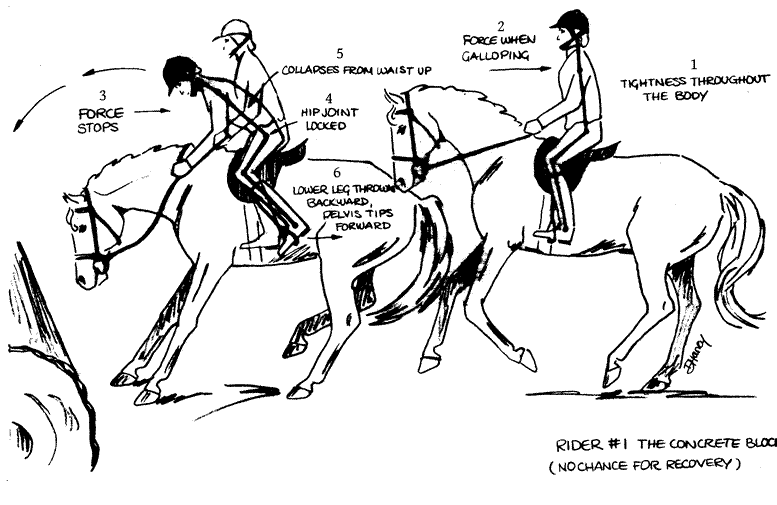
Rider #1 The Concrete Block (No Chance of Recovery)
CLICK TO ENLARGE ILLUSTRATION
Lack of confidence can show up in a great
many areas of our riding and our lives. Having these sensations of
insecurity inside you while you are riding can limit effectiveness,
cause you to think twice about riding itself, send mixed messages to
your horse, and become exhausting. It can infuse your daily life with a
sense of uneasiness, limiting your experiences in the riding you so love
and want to pursue.
Confidence is not only tied up with the
fear of getting injured. It can also be heavily involved with the need
to look good and in control. We certainly don't want to fall off and
get injured, but we also don't want to look bad, or embarrassed, or
experience a loss of power in front of others, suggesting that we have
lost control of the horse and the situation.
When an incident occurs, it is a surprise -
something you have never experienced before. From then on we typically
feel the fear of it (or something similar) happening again. The sense of
fear when it was happening, multiplied by replaying the event in your
mind, keeps you powerless and insecure. You can lose trust in yourself,
your abilities and your capacity for managing a horse.
When riders comes to me with confidence
issues, in any measurable amount, I make an assessment of the person and
the situation. I try to find out what happened to sway their trust in
themselves and their horse, and ask them if they ever truthfully felt
genuinely confident on a horse to begin with.
Many times I learn that there was always
an insecurity associated with riding that made it impossible to ride in a
manner characterized by safety, comfort, effectiveness and balance on a
horse's back.
The carefree days of children learning to
ride on the farm with their grandfather's big old draft horse have
become few and far between, as are the days when kids grew up jumping on
the family pony bareback with a halter and rope and galloping across
open fields. These youngsters learned naturally to feel free and
confident even at full speed. They developed balance and coordination by
just doing it.
Most children and adults today learn to
ride in an urban setting in a supervised lesson program once per week on
school horses. Depending on the quality of the instructors and their
awareness of the needs of beginner riders, this may not be an
environment that nurtures confidence in one's ability.
Many such riders start losing confidence
early on when a horse or pony does not match their level of learning;
the saddle does not fit their body and throws them off balance; they do
not have a fitness program supporting their riding; they are taught to
grip with their knees and sit in a posture that does not work; or the
basic alignment of their spine and pelvis compromises their safety and
puts them at risk.
The first time they feel precarious, lose
their balance and are unseated or fall off can be the one time that
plants a seed of fear that shakes their confidence and trust in riding.
This seed will grow over time as additional incidents reinforce that
lack of confidence, producing timid or fearful riders that horses detect
and react to accordingly.
Shaking a deep-seated fear is not easy.
The mental, emotional and physical sensations related to fear can become
powerful, unconscious and involuntary in establishing a hold over us.
It can gnaw at your gut so that even at the thought of getting on a
horse triggers a host of negative sensations and responses.
